Analysis by Alex M. · Reviewed 2026-07-07 · 9 min read
You've seen the term "IPTV" pop up anywhere from tech forums to Fire Stick setup guides, but the actual meaning stays fuzzy for most people. Is it a cable replacement? A shady streaming service? Or something you're already using without realizing it?
IPTV stands for Internet Protocol Television—television delivered over your internet connection rather than through traditional satellite signals or cable coaxial wires. Instead of broadcast waves traveling through the air or a dedicated cable infrastructure, IPTV sends video content as data packets over the same network that delivers your email and web browsing. The result is live TV, on-demand movies, and time-shifted programming that streams directly to your screen.
This guide answers what is IPTV TV in plain English, explains how does IPTV work step by step, compares it honestly against cable, and gives you the practical knowledge to decide if IPTV fits your viewing habits. No fluff, no fake statistics—just the real answers you need.
What Is IPTV TV Exactly? A Clear Definition
IPTV TV is a system where television services are delivered using the Internet Protocol suite over a packet-switched network like the internet, instead of being delivered through traditional terrestrial, satellite, or cable television formats. Think of it this way: cable TV sends all channels simultaneously down a pipe, and your set-top box filters out the one you want. IPTV sends only the channel you're watching at that moment, on demand, using your internet connection.
The key components that make up an IPTV ecosystem include:
- Headend – Where live TV channels are captured and encoded into digital IP streams.
- Middleware – The software layer that manages user authentication, billing, and the electronic program guide (EPG).
- Content Delivery Network (CDN) – Servers distributed geographically to deliver streams with minimal buffering.
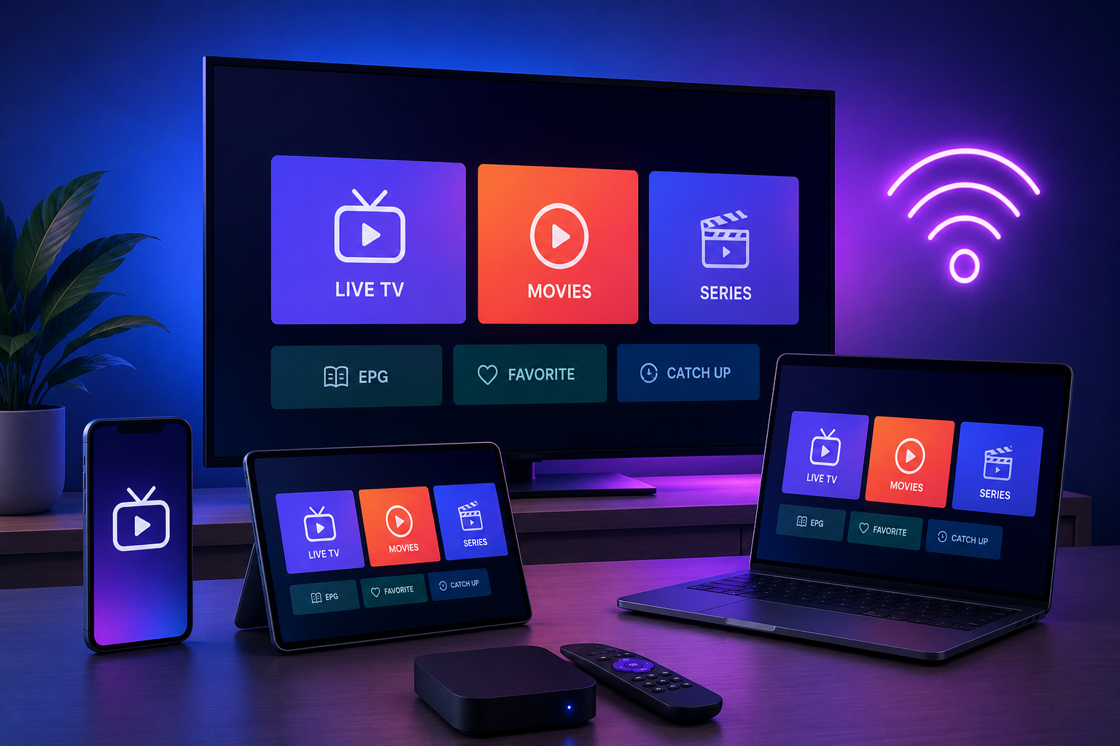
- End-user device – Smart TV, Fire Stick, Android box, phone, or computer running an IPTV player app.
Legitimate IPTV services operate under licensing agreements with broadcasters—similar to how YouTube TV or Hulu Live obtains content rights. Unlicensed IPTV services (often called "pirate IPTV") stream content without permission and exist in a legal gray area. Throughout this guide, we focus on the technology itself and legal providers.
How Does IPTV Work? Step by Step
Related Reading: iptv Abonnement Myths: 5 False Beliefs Sabotaging Your Stream Quality
Understanding how does IPTV work is simpler than most people expect. The process involves four basic stages that happen in seconds every time you change a channel.
1. Content Acquisition and Encoding
Live TV channels are captured at the headend through satellite dishes or direct feeds. That raw video gets compressed using codecs like H.264 or H.265 (HEVC) to reduce bandwidth requirements. A single HD channel might require 5-10 Mbps after compression.
2. Delivery via IP Packets
The compressed video stream is broken into small data packets, each labeled with addressing information. These packets travel across the internet using protocols like IGMP for live multicast streams (one-to-many) or RTSP for on-demand content (one-to-one).
3. Middleware Authentication
When you open your IPTV app, the middleware verifies your subscription credentials, loads your channel list, and presents the electronic program guide. This is where features like catch-up TV (watching shows from earlier in the week) and video-on-demand are managed.
4. Decoding and Playback on Your Device
Your device receives the packets, reassembles them in order, decodes the video stream, and displays it. A buffer of 5-15 seconds typically builds up to absorb network fluctuations and prevent stuttering.
Concrete Benefits for Users
Why are millions of households migrating from cable to IPTV? The advantages go beyond just cutting the cord.
- Massive channel selection: Many IPTV services offer 10,000+ channels spanning global markets—something traditional cable cannot match without massive infrastructure.
- Lower monthly cost: A typical IPTV subscription ranges from $10-$30 per month versus $80-$150 for comparable cable packages.
- Watch on any device: Start a show on your living room TV, pause it, and resume on your phone during the commute. IPTV supports simultaneous streams across devices.
- Catch-up and time-shifting: Most services let you watch programs that aired up to 7 days earlier, eliminating the need for a DVR.
- No long-term contracts: IPTV services operate month-to-month with no early termination fees or equipment rental charges.
Honest Limitations You Should Know
Related Reading: Prodentim Reviews: An Honest Look at What You Actually Get
No technology is perfect. IPTV comes with trade-offs that matter depending on your setup and expectations.
Pros
- Significantly cheaper than cable
- Global channel access from one subscription
- Portable across devices and locations
- No hardware rental fees
- Instant channel switching (no scanning)
Cons
- Requires stable, high-speed internet (25+ Mbps)
- Buffering during peak hours on shared networks
- Reliability varies widely between providers
- Legal ambiguity with unlicensed services
- Fewer local news and sports options in some regions
IPTV vs Cable TV: Honest Comparison
To help you decide which option fits your needs, here is a straightforward comparison based on real-world factors that matter to viewers.
| Feature | IPTV TV | Cable TV |
|---|---|---|
| Monthly cost | $10 – $30 | $80 – $150 |
| Channel count | 1,000 – 20,000+ | 100 – 500 |
| Internet required | Yes (25+ Mbps recommended) | No (coaxial cable only) |
| Contract length | Month-to-month | 1-2 year contract |
| Device flexibility | TV, phone, tablet, laptop | TV only (set-top box) |
| Picture quality | HD/4K (depends on internet speed) | HD (consistent) |
| DVR functionality | Cloud-based (catch-up TV) | Local DVR (limited storage) |
If you are looking for the best IPTV service for Firestick, choose a provider that offers a dedicated app compatible with Android TV (Fire OS) and supports hardware decoding for smooth playback.
Who Is IPTV For? Real User Profiles
Related Reading: Google Play Redeem Code Free: My Real Experience After 4 Weeks
IPTV isn't for everyone. Here are the people who benefit most:
- The cord-cutter: Someone paying $150+ for cable who wants similar content at a fraction of the cost and doesn't mind managing their own setup.
- International viewers: Expats or multilingual households who need channels from their home country—Indian, Arabic, Filipino, or European packages that US cable rarely carries.
- Sports enthusiasts: Fans who want access to multiple international sports packages without subscribing to separate streaming services for each league.
- Tech-savvy users: People comfortable installing apps on Fire Sticks, configuring VPNs, and troubleshooting minor buffering issues.
- Travelers and RV owners: Anyone who wants consistent TV access regardless of location, as long as they have an internet connection.
If you fall into the "occasional TV viewer who just wants the local news and Netflix" category, IPTV is probably overkill. A basic antenna plus streaming subscriptions would serve you better.
How to Get Started: Practical Numbered Steps
Setting up IPTV is straightforward once you understand the process. Here is exactly how to do it.
- Check your internet speed. Run a speed test at speedtest.net. You need at least 25 Mbps for reliable HD streaming, 50 Mbps for 4K. Wired Ethernet is always preferable to Wi-Fi.
- Choose a device. The most popular option is an Amazon Fire Stick (4K Max recommended) due to its low cost and wide app compatibility. Smart TVs with Android TV or webOS also work well.
- Research legal IPTV providers. Look for providers that clearly state they hold broadcasting licenses. Check IPTV review Reddit communities for real user experiences, but verify claims independently.
- Purchase a subscription. Most providers offer 1-month, 3-month, 6-month, and 12-month plans. Start with the shortest term to test reliability before committing long-term.
- Install the IPTV player app. On Fire Stick, go to the Amazon App Store and search for TiviMate, IPTV Smarters, or OTT Navigator. These apps read the M3U playlist URL provided by your IPTV service.
- Configure the app with your subscription details. Enter the M3U URL or Xtream Codes provided by your IPTV service. The app will download the channel list and program guide automatically.
- Set up a VPN (optional but recommended). If you use an unlicensed IPTV service or want to bypass ISP throttling, a VPN encrypts your traffic and hides your IP address. ExpressVPN and NordVPN are popular choices.
- Test and optimize. Browse through channels, check the EPG accuracy, and adjust video buffer settings in the app if you experience stuttering.
Premium IPTV Subscription Bundles
Review live stock availability, promotional bundle milestones, and open checkout routes for verified legal IPTV providers.
BUY NOW →Advanced Tips for a Better IPTV Experience
Once your basic setup is running, these optimizations will dramatically improve your viewing quality.
Use a wired connection. Ethernet eliminates Wi-Fi interference from neighbors, microwaves, and Bluetooth devices. Even a powerline adapter (which sends data through your home's electrical wiring) is better than Wi-Fi.
Configure your IPTV app buffer. Most players let you set a buffer size between 1-10 seconds. Increasing it to 5-7 seconds reduces buffering events caused by brief network spikes, at the cost of a slightly longer channel change time.
Choose your EPG source carefully. Poor electronic program guide data can make IPTV frustrating. Some services offer built-in EPG, while others require you to import XMLTV files from third-party sources. Test a few to find the most accurate one.
Set up multi-room streaming. Many IPTV subscriptions allow 3-5 simultaneous connections. You can watch different channels on different TVs in your house without conflicts.
⚠️ Limited Inventory Notice: Examine structural specifications, direct manufacturing packages, and instant priority shipping paths for verified IPTV hardware and subscription bundles.
CLAIM SPECIAL OFFER →
Finding Legal IPTV Providers
The question "where to buy IPTV subscription" often leads to murky waters. Distinguishing legal from unlicensed providers requires careful evaluation.
Legal IPTV providers include services like YouTube TV, Hulu + Live TV, Sling TV, Philo, and FuboTV. These are fully licensed, charge $25-$80 per month, and offer robust customer support with no legal risk. The trade-off is a smaller channel selection (100-250 channels) and regional content restrictions.
"Grey market" IPTV services (the kind you find on Reddit selling 10,000 channels for $15/month) operate without broadcasting licenses. While many users subscribe to them without issues, these services can be shut down without notice, may expose your data to security risks, and exist in a legally ambiguous zone. We do not recommend using them.
If you want an IPTV channels list USA with legal providers, start with YouTube TV or FuboTV for the best mix of sports, news, and entertainment in the American market.
Final Verdict: Should You Switch to IPTV?
IPTV TV represents a genuine shift in how television is delivered—moving away from broadcast infrastructure toward internet-based streaming. For the right user, it offers massive channel selection, lower costs, and flexibility that cable simply cannot match. The technology works reliably when your internet connection is solid, and setup takes less than 30 minutes on a Fire Stick or smart TV.
If you are a cord-cutter with decent broadband, comfortable managing your own entertainment setup, and looking to save $50-$100 per month, IPTV is worth serious consideration. Start with a legal provider to understand the experience first, then evaluate whether the expanded channel options of premium services justify the switch.
Remember: the quality of your IPTV experience depends 50% on your internet connection, 30% on your provider, and 20% on your device and configuration. Invest in those first three elements before blaming the technology.
⚠️ Flash Priority Action Required:
BUY NOW — SECURE DEACTIVATION CODESTransparency Note: Accessing this outbound link redirects to an authenticated partner checkout layer. Our collective analysis remains completely independent, structured under regional promotional distribution frameworks at zero added cost.
Factual Clarifications (FAQ)
Is IPTV legal in the United States?
Yes, IPTV technology itself is completely legal. The legality depends entirely on whether the provider has obtained proper broadcasting licenses for the content they stream. Legal services like YouTube TV operate under license agreements. Unlicensed IPTV services that stream copyrighted content without permission operate in violation of copyright law, and using them may expose you to legal liability, though enforcement typically targets providers rather than end-users.
What internet speed do I need for smooth IPTV streaming?
For standard definition channels, 10 Mbps is sufficient. For HD streaming (720p/1080p), you need at least 25 Mbps. For 4K IPTV channels, a minimum of 50 Mbps is recommended. These requirements assume you are the only heavy internet user in the household. If multiple people stream, game, or work from home simultaneously, add 15-20 Mbps per additional user for a buffer.
What is the best IPTV service for Firestick in 2026?
The best legal IPTV service for Firestick depends on your content preferences. For sports fans, FuboTV offers excellent sports coverage and works smoothly on Firestick. For general entertainment, YouTube TV provides unlimited DVR storage and a clean interface. For budget-conscious viewers, Sling TV offers flexible packages starting at $40/month. Each service has a dedicated Firestick app available directly from the Amazon App Store.
Can I watch local channels with IPTV?
Yes, but availability varies by region. Legal IPTV providers like YouTube TV include local ABC, CBS, NBC, and Fox affiliates in most major markets. Smaller or rural markets may have limited local channel access. Some IPTV services offer local channels as part of their base package, while others require an add-on. You can supplement this by using a digital